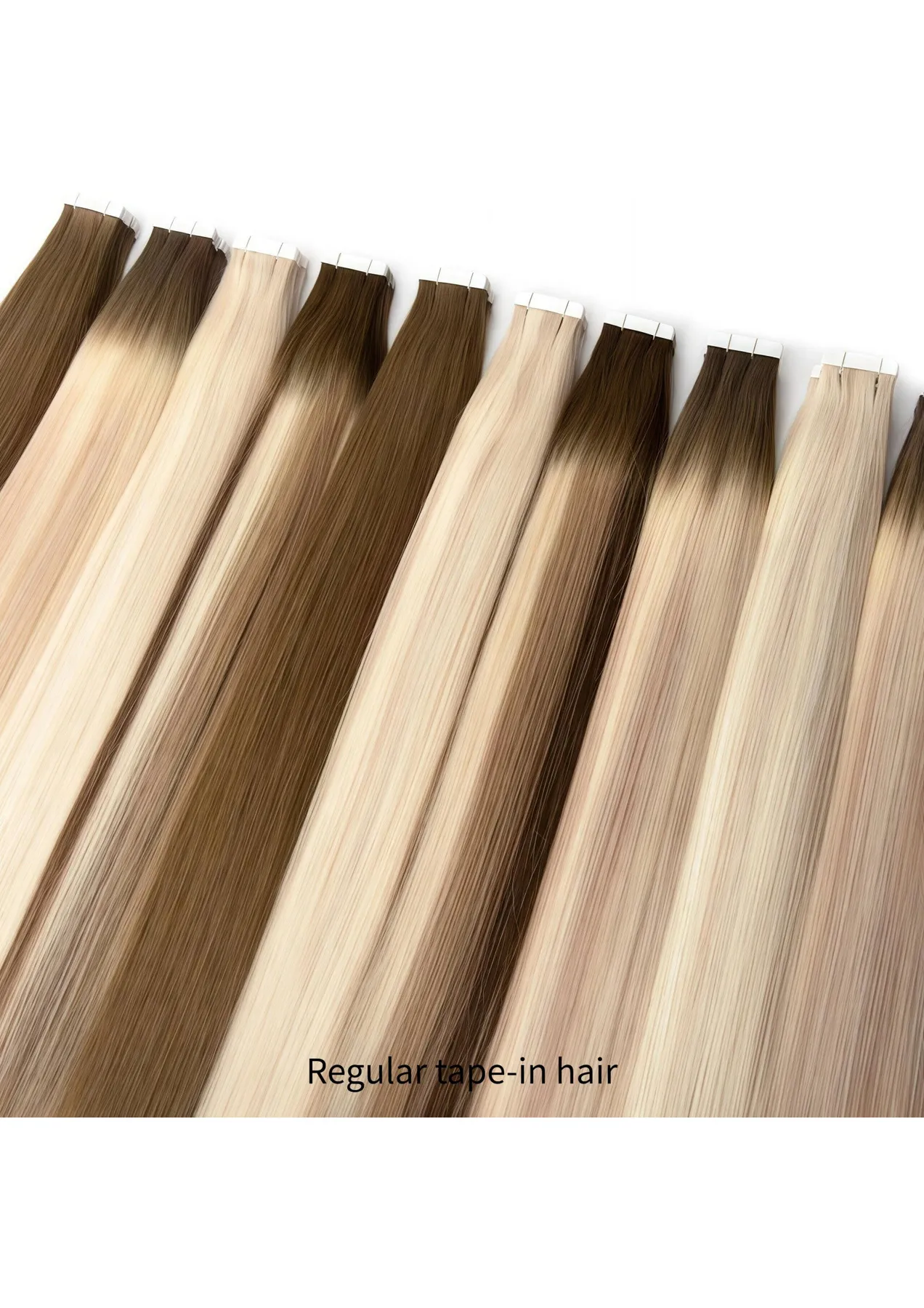
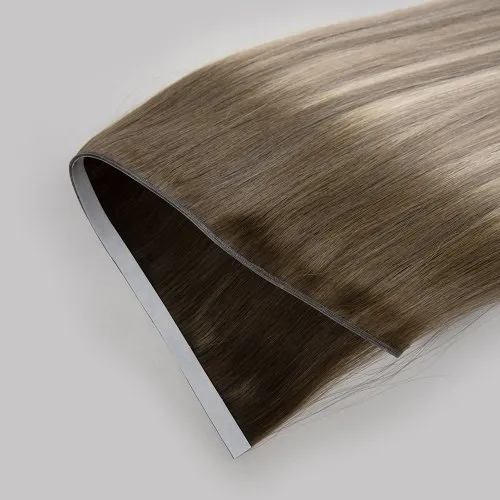
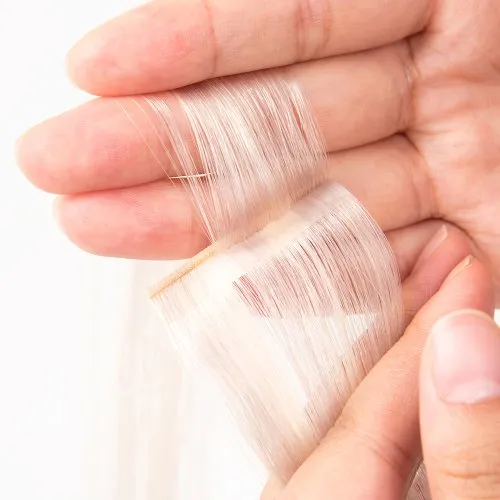
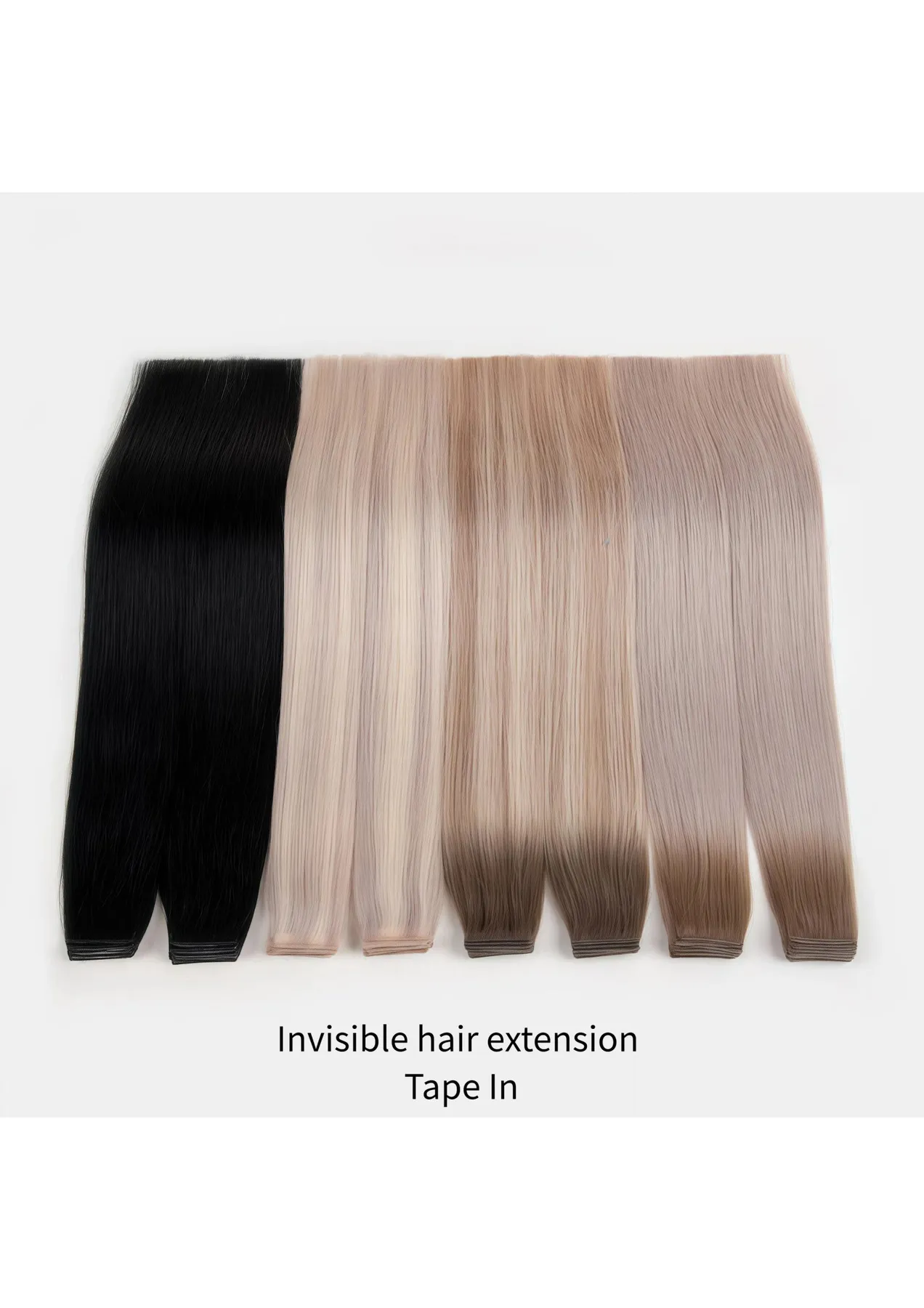
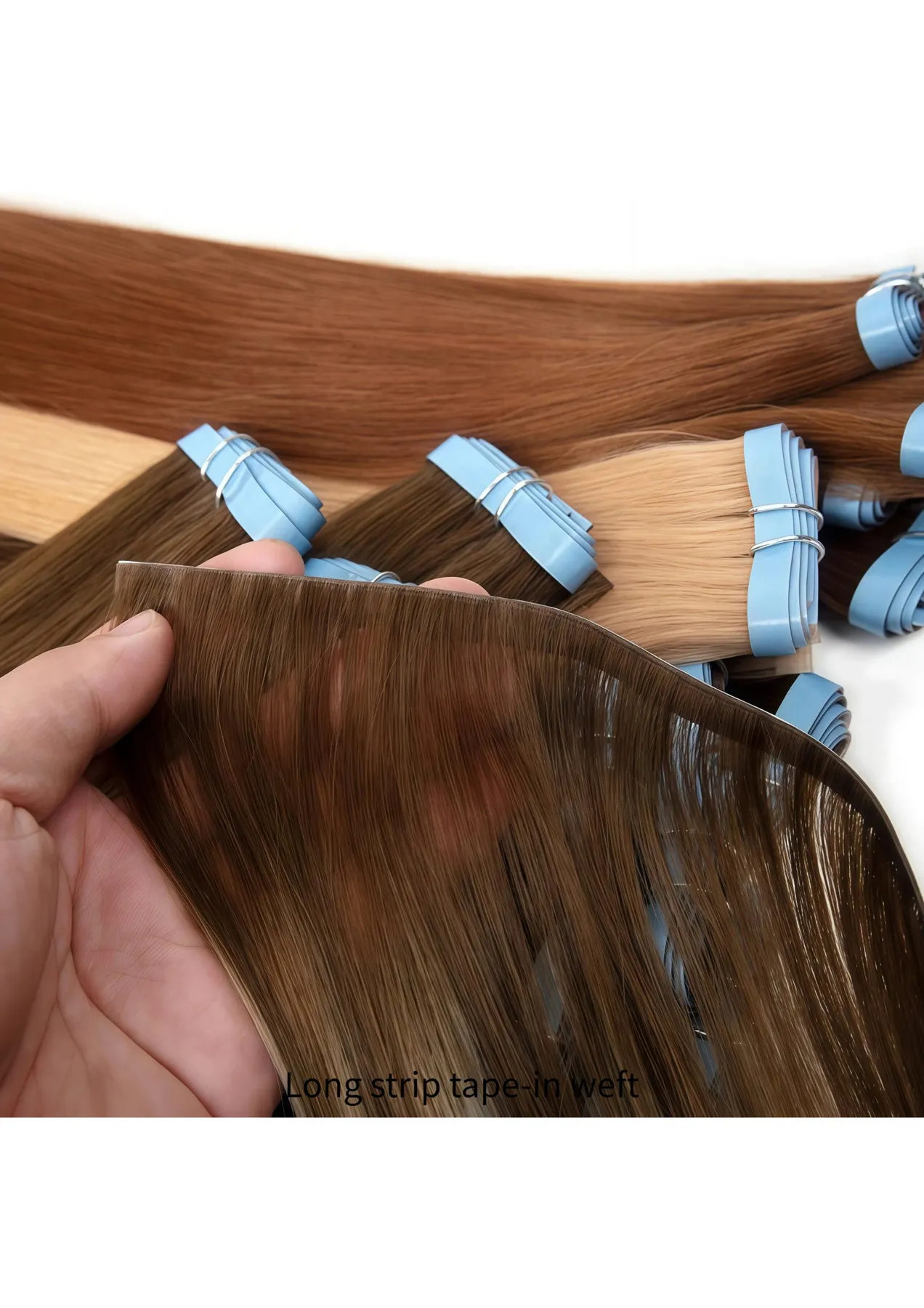
Classic, Invisible, Injected, Genius and Long-Strip Tape-In constructions need their own attachment specification. Compare actual references before choosing the format for your salon or private-label range.
Tape-In Extensions: purchasing specification| Decision | What to record and approve |
|---|
| Base and tab | Record width, height, edge finish and hair emergence on both sides. Invisible and injected labels do not replace a construction sample. |
|---|
| Weight and count | Define grams per individual piece and pieces per pack. Separate net hair from base weight and clarify whether a pair contains two pieces. |
|---|
| Long-Strip format | Specify the complete strip dimensions and strip weight separately; do not copy small-tab weight examples. |
|---|
| Replacement materials | Confirm replacement-tape dimensions, adhesive format, preparation and professional removal instructions for the approved base. |
|---|
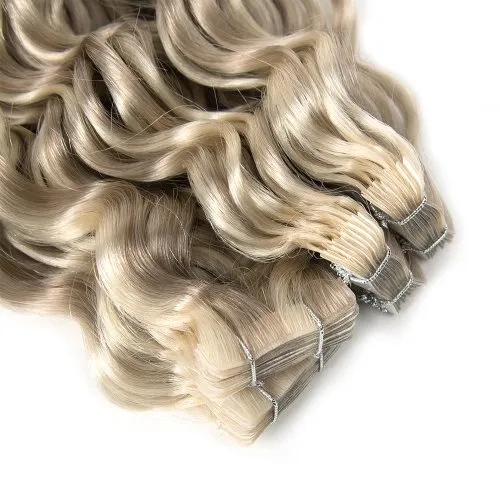
| Texture and packaging | Straight, wavy and curly development can be discussed. Approve the selected pattern and shade on the finished tape, then confirm protective liners and pack labels. |
|---|
Choose from our Premium Remy, Cuticle Remy, Fully Cuticle-Intact Remy grades, with straight, wavy, curly textures. See the hair-quality guide for our grade definitions and processing details.
For gram-based extensions and bulk hair, standard starting quantities are 100g per solid colour and 200g per T-Color or mixed colour. The final minimum depends on construction, colouring and order size; sample and trial quantities are quoted separately.
Invisible versus regular Tape-In comparison · Compare material definitions · Private-label development
Discuss your product specification