
PROFESSIONAL HAIR EXTENSION GUIDE

Genius Weft vs Hand-Tied Weft

Genius Weft and Hand-Tied Weft are professional weft categories, but product names alone do not define one universal seam, weight or cutting specification.

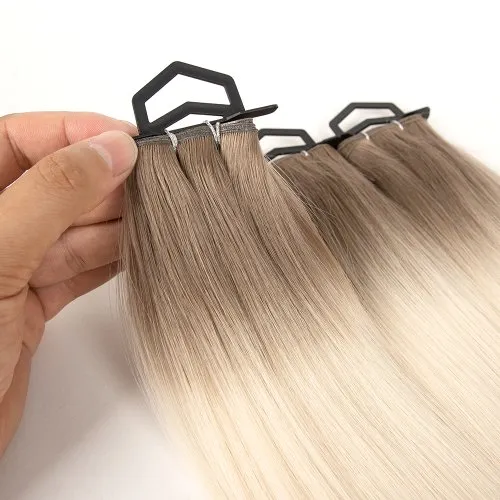
Close view of a professional human hair weft construction

QUICK ANSWER

The short answer

Genius Weft is generally specified as a thin weft construction and may be designed for cutting, while conventional Hand-Tied Weft is built around a tied seam and commonly requires the cut edge to be secured. Actual construction varies by manufacturer, so buyers should confirm seam measurements, return hair, weight, cutability and post-cut stability on the physical sample.

KEY FACTS

What buyers should establish first.

  • The name Genius Weft does not represent one universal manufacturing specification.
  • Cuttability should be confirmed by the supplier and verified on the sample.
  • Seam height, seam width, return hair and weight need separate measurements.
  • Cutting stability matters only when the intended installation requires cutting.
  • Hair quality is a separate specification from weft construction.

CONSTRUCTION COMPARISON

Compare measurable features, not category names.

Two suppliers can use the same category name while producing different seam dimensions, density, weight distribution or edge behaviour. The comparison should therefore start with the exact samples and written specifications.

Genius Weft and Hand-Tied Weft purchasing comparison
FeatureGenius WeftHand-Tied WeftBuyer check
ConstructionThin weft-style construction; details vary by manufacturerHair is secured around a tied seam; details varyAsk for construction description and inspect the seam
CutabilityMay be designed for cutting, but must be confirmedConventional constructions commonly require securing if cutPerform a controlled cut test only where relevant
Return hairAmount and length depend on constructionAmount and length depend on tying and finishingMeasure and compare on equal sample widths
SeamRecord height, thickness, flexibility and edge conditionRecord height, thickness, flexibility and tied edgeUse the same measurement method
WeightConfirm weight per piece or per stated widthConfirm weight per piece or per stated widthCompare equal length, width and net hair weight
Hair qualitySpecified separatelySpecified separatelyDo not infer material quality from the weft name

CUTTING TEST

Cuttability and cutting stability are different questions.

A supplier may state that a weft can be cut, but the buyer still needs to review what happens at the new edge. A controlled test can record whether the edge opens, whether hair releases and whether the cut point requires sealing or stitching.

The test should be performed only on a construction represented as suitable for cutting and should follow the supplier's handling guidance.

RETURN HAIR

Record return hair separately from seam thickness.

Return hair can affect feel near the seam and the finished installation. Its amount and length should be inspected on comparable sample widths rather than inferred from product photography.

A thin-looking seam does not automatically define the amount of return hair, the net hair weight or the material quality.

SAMPLE SPECIFICATION

Build one comparison sheet for both products.

  • Product and supplier sample code
  • Weft width, seam height and seam thickness
  • Net hair weight and nominal length
  • Return-hair observation
  • Cutting claim and the method used to verify it
  • Post-cut edge and brushing observation
  • Hair material, colour and processing description
  • Packaging and handling instructions

BUYER CHECKLIST

Use this before approving a sample or specification.

  1. Request the supplier's exact construction description.
  2. Measure seam height, thickness and sample width.
  3. Compare net hair weight at the same length and width.
  4. Inspect return hair on the physical sample.
  5. Confirm whether cutting is intended and whether the edge needs securing.
  6. Record the result of any controlled cutting test.
  7. Evaluate hair material and colour separately from weft construction.
  8. Keep installation guidance with the approved specification.

FAQ

Practical questions from B2B buyers.

Can every Genius Weft be cut anywhere?

Not every Genius Weft uses the same seam construction. When the selected product is designed for cutting, test several cut points, brush the new edges and inspect them again after washing and drying. Record whether the approved construction requires edge sealing or another handling method.

Can Hand-Tied Weft be cut?

Traditional Hand-Tied Weft is normally supplied in planned sections. If a section must be shortened, secure the new edge using the method confirmed for that product. Width planning should therefore be completed before packaging and piece count are finalised.

Is Genius Weft always thinner than Hand-Tied Weft?

Genius Weft is generally developed as a thin continuous Weft, while Hand-Tied Weft uses a tied track supplied in sections. Compare measured seam height, thickness, flexibility, width and weight on the actual samples rather than relying only on category names.

Does the weft type define hair quality?

No. Hair material, cuticle condition, processing, colour and fibre profile are separate specifications.

APPLY THE GUIDE TO YOUR PROJECT

Discuss a sample or written specification.

Send the product type, target specification and reference material you already have. We can review the request before a sample or quotation is prepared.

Request a sampleWhatsApp Email

Talk to Prime Human Hair

Discuss products, samples or private-label requirements.

WhatsAppStart a conversationEmail usinfo@primehumanhair.comRequest a Sample