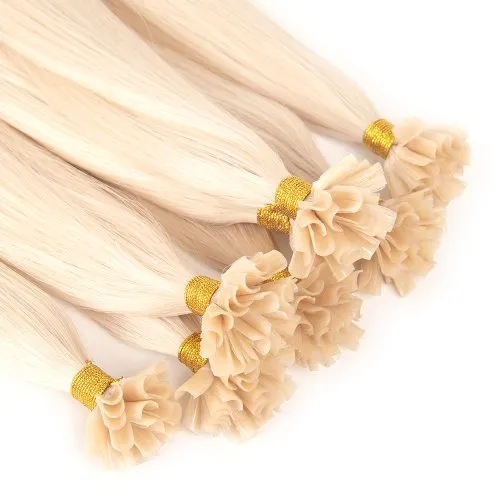
U-Tip Keratin Extensions
A keratin extension with a U-shaped bond format. Review the bond shape and dimensions, strand weight and pack quantity before developing the hair and colour specification.

KERATIN BOND EXTENSION MANUFACTURING
Keratin bond extensions are individual-strand systems in which the hair, strand weight and bond geometry must work together.
A premium product is not defined by a small bond alone. The bond should be appropriate for the strand weight, installation method, target client and intended application.
U-Tip and Flat-Tip references help define keratin-bond shape. I-Tip is a different attachment format; it is not a substitute name for a keratin bond. Confirm dimensions, strand weight and pack quantity separately.
A keratin extension with a U-shaped bond format. Review the bond shape and dimensions, strand weight and pack quantity before developing the hair and colour specification.
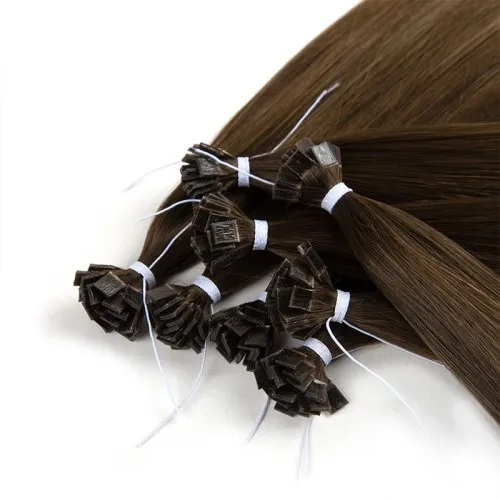
An individual-strand extension with a flat-tip bond format. Agree the bond dimensions, strand weight and pack configuration separately from the hair-only weight.
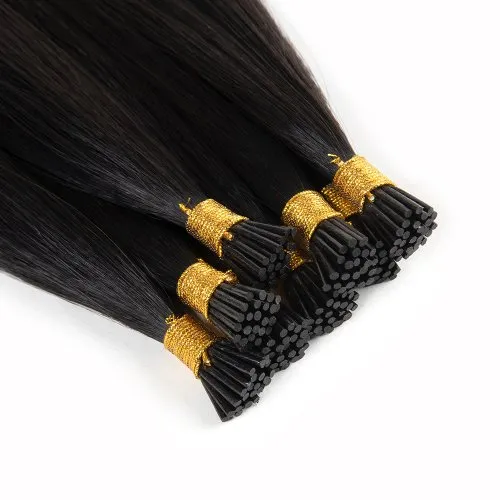
An individual-strand I-Tip format for the intended bead or ring application. Confirm tip dimensions and strand weight against the proposed attachment system.
QUICK ANSWER
A high-quality keratin bond extension combines suitable human hair with consistent strand weight, controlled bond dimensions and a bond shape that works with the intended installation method. Hair quality and bond quality should be evaluated separately because a good hair fibre cannot compensate for an inconsistent attachment.
PRODUCT FAMILY
Keratin-bond terminology varies between suppliers, so the physical form should be confirmed rather than inferred from a name. Our current keratin range includes the following formats where confirmed for the project:
An individual pre-bonded strand developed around a selected strand weight and a defined bond shape. Because K-Tip is a specific product, its deeper development framework is covered on our K-Tip manufacturer page.
A pre-shaped keratin bond format. The term may also be used alongside nail-tip terminology, so the approved sample should define the exact geometry, dimensions and installation method.
A flatter bond format that should be assessed for width, thickness, flexibility, strand weight and compatibility with the intended application technique.
Changes to hair, colour, strand weight, bond dimensions or bond shape are treated as connected variables. A change to one may require the finished strand to be sampled again.
I-Tip and Nano-Tip are non-bonded individual-strand systems used with bead or ring application methods. They remain available within our wider professional extension range but are specified separately from keratin-bond formats.
SYSTEM DESIGN
The amount of hair in a strand determines the visual density delivered at each attachment point. The bond must hold that strand in a form suitable for the intended professional method, while remaining consistent enough for efficient installation.
Making the bond smaller without adjusting the hair amount can create an unbalanced product. Conversely, lowering strand weight changes the number of pieces needed to reach the planned density. This is why bond size and strand weight should be developed as one system rather than as separate cosmetic choices.
| Specification | Development options |
|---|---|
| Bond format | K-Tip, U-Tip, Flat Tip or another confirmed keratin format |
| Bond dimensions | Length, width and thickness recorded from the approved strand |
| Strand weight | Selected for the intended application and checked across multiple pieces |
| Hair distribution | Even placement through the bond and along the strand |
| Hair material | Defined for the product and target processing route |
| Usable length and ends | Measured separately from the attachment |
| Colour and texture | Approved on the relevant finished form |
| Packaging | Piece count, labels and private-label presentation confirmed for the order |
SAMPLE METHOD
Start by selecting multiple strands rather than a single best-looking piece. Record strand weight, bond length, width and thickness, then compare bond shape, hair distribution and colour consistency across the group.
Next, use the intended professional installation and removal method. This stage evaluates the keratin construction and handling. Hair fibre performance should be evaluated separately through the same washing, drying and styling procedure used for other extension samples.
For the wider evaluation record, use our guide on how to assess hair-extension samples.
COLOUR DEVELOPMENT
A colour may appear slightly different when loose hair is divided into individual strands because fibre distribution and density change the visual result. For demanding shades, the approved colour should be confirmed on the finished keratin strand rather than only on loose hair.
Rooted, blended and dimensional shades need a clear reference for both colour and placement. The starting material and processing route also influence what can be produced responsibly, so shade approval should not be separated from the selected hair specification.
Read more about our colour-development process and the technical guide to custom extension colour approval.
B2B SPECIFICATION
A quotation becomes more meaningful when each supplier receives the same written product definition. Confirm the following fields before requesting a production price:
Bond dimensions and strand weight are developed as one product system. The approved specification records bond length, width, thickness, strand weight, piece count, colour and intended professional application.
FAQ
A high-quality keratin extension combines suitable 100% human hair with accurate strand weight, consistent bond dimensions, even hair distribution and a bond shape suited to the intended installation method. Buyers should compare multiple strands for weight, geometry, colour and consistency, then test installation, removal and hair performance separately.
No. A smaller bond can create a lower-profile installation only when the strand weight and bond structure remain appropriate. Reducing the attachment while keeping too much hair can produce an unbalanced strand.
Ask for recorded dimensions and compare them with the intended strand weight rather than accepting “mini” as a complete specification.
Strand weight affects finished density and the load carried at each attachment point. Heavy strands may be unsuitable for some target applications, while very light strands require more pieces to reach the planned density.
Weight should therefore be selected together with bond size, usable length and target use. There is no single universal figure for every client or method.
Yes. Bond length, width and thickness affect installation profile, strand balance and consistency across the set. Record these dimensions together with strand weight, piece count and the approved finished-strand sample.
Check several strands for weight, dimensions, shape, hair distribution and colour. Then use the intended installation and removal method to evaluate the attachment construction.
Run a separate hair-performance assessment after washing and styling. Approval should document both results so a later bond adjustment is not confused with a change in hair quality.
Prime Human Hair can develop K-Tip, U-Tip, Flat-Tip and other confirmed keratin-bond formats around the required human-hair material, usable length, strand weight, bond shape, bond dimensions, colour, texture, piece count and private-label packaging. The finished strand is sampled and approved before bulk production.
START A PRODUCT CONVERSATION
Send the bond format, intended installation method, strand weight direction, length, colour and packaging requirements you want to evaluate.