PROFESSIONAL HAIR EXTENSION GUIDE

Double Drawn and End Fullness Explained: How Hair Extension Fullness Is Actually Measured

When a buyer asks for Double Drawn or full ends, the request sounds simple. In practice, it is not. Different suppliers can use Double Drawn, Super Double Drawn, full ends and End Fullness differently. This is why two products carrying the same label can look very different. Professional buyers should define the actual length distribution and measurement method instead of relying on the marketing term alone.

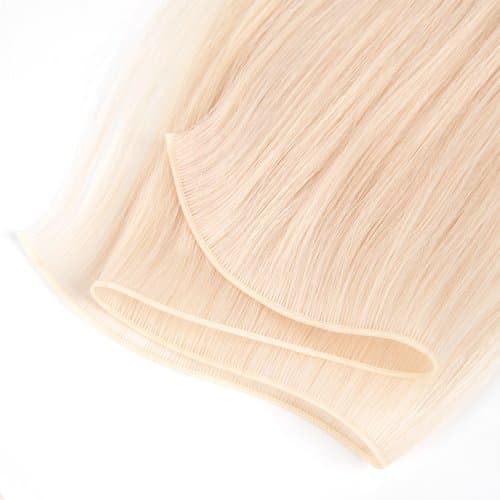
Human hair extension lengths prepared for Double Drawn and End Fullness specification review

QUICK ANSWER

The short answer

Double Drawn describes a fuller length distribution in which a high proportion of hairs reach or approach the target length and substantially shorter hairs are reduced. End Fullness is a separate measurable specification, but it has no single universal industry measurement method. Two common methods are weight ratio and circumference ratio. The buyer and manufacturer should agree which method is being used before confirming the order.

KEY FACTS

What buyers should establish first.

  • Double Drawn has no universal industry percentage standard.
  • A higher proportion of hairs reach or approach the target length, while substantially shorter hairs are reduced.
  • The 85/15 composition is one production example, not a universal Prime Human Hair standard.
  • End Fullness may be measured by weight ratio or circumference ratio.
  • A percentage is incomplete unless the measurement method and reference points are stated.
  • At Prime Human Hair, 100 g means net human-hair weight excluding non-hair attachment materials.

DOUBLE DRAWN

What does Double Drawn mean?

Double Drawn is commonly used to describe hair with a fuller length profile. However, there is no universal industry percentage that automatically makes one product Double Drawn and another Super Double Drawn.

Prime Human Hair uses Double Drawn as a production concept describing a product in which a high proportion of the hair reaches or approaches the target length, substantially shorter hairs are reduced, and the finished ends remain fuller than a standard mixed-length bundle.

PRODUCTION EXAMPLE

A practical Double Drawn example

One production example for a 10-inch Double Drawn specification could be approximately 85% of the hair at 10–12 inches and approximately 15% at 8–9 inches.

This is an example of a possible production composition, not a universal fixed formula for every Prime Human Hair product. The exact distribution can vary with target length, hair quality, colour, product system and the agreed fullness requirement.

A professional quotation should define the intended result rather than rely only on the words Double Drawn.

END FULLNESS

What is End Fullness?

End Fullness describes how full the hair remains near the lower part of the finished product. It is often expressed as a percentage, but the percentage alone is not enough. A buyer should always ask how that percentage is being measured.

The hair industry does not use one universal method. Two common approaches are the weight-ratio method and the circumference-ratio method.

METHOD 1

End Fullness by weight ratio

In the weight-ratio method, the percentage refers to the amount of long hair near the target length relative to the total hair weight.

For a 20-inch product specified at 35% End Fullness by weight, one possible definition is: the weight of hair measuring 19 inches or longer divided by the total net human-hair weight equals 35%.

This method focuses on how much of the product's weight is concentrated near the target length.

METHOD 2

End Fullness by circumference ratio

In the circumference-ratio method, fullness is evaluated by comparing the circumference near the lower part of the hair with the circumference near the upper part.

For a 20-inch product specified at 35% End Fullness by circumference, one possible production definition is: circumference at approximately the 19-inch position divided by circumference at approximately the 3-inch position from the top equals 35%.

This method focuses on the visible thickness profile from top to end. It is one measurement method, not the only definition of End Fullness.

METHOD ALIGNMENT

Why can the same 35% mean different things?

One supplier may define 35% by weight while another defines it by circumference. Those are not the same measurement. Even if both quotations say 35% End Fullness, the products may not be directly comparable.

Prime Human Hair recommends confirming the measurement method, target length, reference point and agreed finished appearance before approving the specification.

Two common End Fullness measurement methods
Method20-inch / 35% exampleWhat it describes
Weight ratioHair at 19 inches or longer ÷ total net human-hair weight = 35%How much product weight remains near the target length
Circumference ratioCircumference near 19 inches ÷ circumference near 3 inches from the top = 35%The visible thickness profile from upper section to ends

RELATED TERMS

Is End Fullness the same as Double Drawn?

No. They are related, but they are not the same concept. Double Drawn describes the overall length distribution and reduction of substantially shorter hairs. End Fullness gives a more measurable way to describe how much hair remains near the ends.

A buyer can therefore request Double Drawn plus 35% End Fullness or Double Drawn plus 50% End Fullness as two different specifications.

SPECIFICATION CHOICE

Is 50% always better than 35%?

Not necessarily. Higher fullness generally means more long hair is required to remain near the target length. That usually increases raw-material requirements and manufacturing cost.

The right fullness depends on the salon's target client, intended finished look, extension method, length, colour and brand price position. A fine-hair client may not need the same fullness profile as a luxury-volume installation. The goal is the correct specification, not simply the highest number.

LENGTH & COLOUR

Why does long blonde hair cost more at higher fullness?

Long, light-coloured hair creates two simultaneous demands: more hair must reach the target length, and that long hair must also survive additional colour processing.

Achieving a high End Fullness target on a 24–30-inch very light blonde product generally requires more selective starting material than producing a shorter dark product. Price comparisons should consider length, colour, hair grade, End Fullness and processing level together.

MARKETING LANGUAGE

Why can Super Double Drawn be misleading?

Super Double Drawn sounds precise, but it is not a universal technical standard. One factory may use the term for a very full product, while another may use it for a moderate improvement over its own standard Double Drawn grade.

Without a measurable specification, the words alone do not tell the buyer enough. A more useful request is: Please quote Double Drawn with the agreed End Fullness measured by the specified method.

PRIME HUMAN HAIR METHOD

How Prime Human Hair handles fullness specifications

Prime Human Hair treats fullness as part of the written product specification. Depending on the project, the buyer can define target length, Double Drawn requirement, End Fullness percentage, weight-ratio or circumference-ratio method, net human-hair weight and approved physical sample.

Once the sample is approved, the physical sample and written specification become the reference for bulk and repeat production. This does not mean every natural hair bundle will be microscopically identical. It means the buyer and manufacturer have agreed on the same measurement language.

NET HAIR WEIGHT

What does 100 g mean in these calculations?

At Prime Human Hair, 100 g refers to net human-hair weight. Thread, tape, keratin, clips and other non-hair attachment materials are not included in the stated hair weight.

This matters particularly when using a weight-ratio End Fullness method because the calculation should be based on hair rather than non-hair attachment components.

RFQ EXAMPLE

What should buyers put on an RFQ?

Instead of writing only 22-inch, Double Drawn, use a fuller specification such as: Product: Genius Weft; Length: 22 inches; Net human-hair weight: 100 g; Hair grade: Fully Cuticle-Intact Remy; Double Drawn: Yes; End Fullness: 50%; Measurement: circumference ratio; Colour: approved reference.

This gives the supplier a clearer target and makes quotations from different suppliers easier to compare.

BUYER CHECKLIST

Use this before approving a sample or specification.

  1. State the target length and measurement method.
  2. Define the required Double Drawn result rather than relying on the label alone.
  3. Confirm whether End Fullness uses weight ratio or circumference ratio.
  4. Record the lower and upper reference points used in the calculation.
  5. Confirm that stated grams refer to net human-hair weight.
  6. Evaluate colour and processing together with the fullness target.
  7. Approve the finished appearance on a physical sample.
  8. Retain the written specification and sample for repeat-production comparison.

FAQ

Practical questions from B2B buyers.

Is Double Drawn a universal standard?

No. Different factories may define Double Drawn differently. Buyers should confirm the actual length distribution or measurable fullness requirement.

What does 35% End Fullness mean?

It depends on the measurement method. It can be defined by the weight of hair near the target length or by a circumference comparison between the end and upper part of the product.

Is End Fullness a weight percentage?

It can be, but not always. Some factories use a weight-ratio method, while others use a circumference-ratio method.

Is 50% End Fullness better than 35%?

Not automatically. Higher fullness generally requires more long hair and higher cost, but the right target depends on the product and client.

Does Double Drawn guarantee full ends?

Not by itself. Because the term is not universally standardised, buyers should also define the required End Fullness measurement.

APPLY THE GUIDE TO YOUR PROJECT

Discuss a sample or written specification.

Send the product type, target specification and reference material you already have. We can review the request before a sample or quotation is prepared.

Request a sampleWhatsApp Email

Talk to Prime Human Hair

Discuss products, samples or private-label requirements.

WhatsAppStart a conversationEmail usinfo@primehumanhair.comRequest a Sample