
Buyer Guides

Genius Weft Wholesale: A Sample Inspection Checklist for Salon Brands

Approve a Genius Weft sample by inspecting the physical construction, not just its thin appearance in a photograph. For a salon brand, the essential record should cover seam profile, finished width, return hair, net hair weight, hair distribution and any permitted cutting operation. Keep those construction checks separate from shade, usable length and material evaluation. The result should be a repeatable approval record for one exact product reference, not a blanket approval of every item sold as Genius Weft.

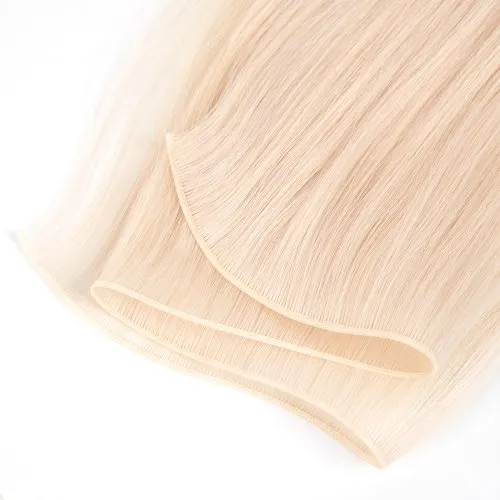
Genius Weft reference for seam and construction review

QUICK ANSWER

The short answer

Identify the Genius reference, measure its agreed width and weight basis, inspect both sides of the seam and confirm whether the requested no-return-hair construction is present. Obtain cutting guidance before testing an edge. Record the method and sample result, then approve the exact construction and specification rather than the product name alone.

On this page

KEY FACTS

What buyers should establish first.

  • No return hair means no short folded-back hairs at the top seam, not simply reduced return hair.
  • Prime offers confirmed Genius no-return-hair constructions; this does not describe every weft.
  • 50g and 100g are example configurations per defined weft or pack, subject to sample confirmation.
  • Cutting permission and the method must follow the selected construction.

Identify the sample before inspecting it

Record the product reference, material description, shade, length, stated weight and number of pieces supplied. Photograph the unopened identification and then the sample itself. This sounds administrative, but it is how a later inspector knows which construction was approved when several similar-looking tracks are being compared.

Ask whether the sample represents the exact construction intended for production. If it is only a display reference, identify the fields that will change and require confirmation. Do not approve a new weight, width or material combination merely because its label uses the same Genius name.

Inspect the upper seam from both sides

Lay the weft out under a consistent viewing setup and inspect the seam profile, attachment area and hair emerging below it. Record what you actually observe rather than writing “invisible” or “comfortable” as if those were measured properties. If seam height or thickness is important to your brief, agree the measurement points and method before taking readings.

For a no-return-hair request, inspect specifically for short folded-back hairs at the top seam. Do not substitute a general photograph of smooth lengths for that check. Record whether the selected sample matches the requested construction, while keeping any unexplained short hairs or edge features available for discussion with the supplier.

Reconcile width, piece count and weight

A pack weight does not define the width of each section. Measure the finished width and count the supplied pieces, then reconcile those values with the stated weight basis. Ask whether the number refers to net hair or a finished item that includes the seam. Two equally weighted packs can distribute the hair differently across the available track width.

For sample discussion, 50g or 100g can be useful reference configurations when their unit is explicit. They are not automatically the weight of every Genius piece. If your intended use requires several sections, record their individual widths and the total pack configuration rather than accepting only the aggregate grams.

Genius Weft sample inspection record
CheckRecordDo not infer
Reference identityConstruction code and sample revisionThat every Genius-labelled item is equivalent
Seam profileAgreed dimensions and observation photosA universal thinness or comfort score
Return hairPresence or absence of folded-back hair at the seamNo return hair across all weft families
Width and countEach section width and number of sectionsPiece layout from total grams alone
WeightNet hair / finished item definition and readingEqual grams mean equal distribution
Cut edgePermission, method and observed resultCutability without construction-specific guidance

Plan a cut-edge test before making the cut

Ask the supplier whether cutting is permitted on that exact construction and what preparation or edge handling is required. Agree where and how a test section will be cut, and reserve an unchanged sample if possible. This is a product-evaluation step, not a general installation instruction; the intended professional method needs its own qualified assessment.

Record the edge condition before and after the agreed test and any specified handling or washing sequence. If a result is unclear, stop and ask for clarification rather than repeatedly cutting the remaining reference. An unrecorded cut can make it difficult to distinguish a construction issue from a test that did not follow the agreed method.

Evaluate hair performance separately from track design

Use the agreed sample-evaluation method for shade, usable length, end fullness, texture and any washing observations. Keep the track assessment in a separate section of the record. Review material processing and attachment suitability as separate requirements, then approve both for the intended product.

If you compare two material grades on the same construction, label them clearly and keep the test conditions consistent. If you compare two constructions, hold the material and colour direction as comparable as practical. This avoids attributing every observed difference to the word Genius.

Decide whether this construction fits your collection

A Genius sample is worth developing when its actual seam, width, weight distribution and handling meet the intended professional application. It is not automatically the right choice just because a buyer wants a thinner-looking track. A different construction may be more suitable if your method requires a particular attachment or fixed-width section.

Record your decision and the unresolved fields. Approval should identify the exact sample and the conditions accepted. If you later change width, material, shade processing or the no-return-hair requirement, review the affected fields rather than carrying the original approval forward without checking.

Further Reading

Explore our product specifications and linked construction references when preparing your sample request.

BUYER CHECKLIST

Use this before approving a sample or specification.

  1. Identify one exact Genius reference and sample revision.
  2. Inspect the top seam and return hair directly.
  3. Reconcile width, section count and weight basis.
  4. Obtain permission and a method before testing a cut edge.

FAQ

Practical questions from B2B buyers.

Does no return hair mean the same thing as less return hair?

No. In this specification, no return hair means no short folded-back hairs at the top seam. Request that construction explicitly and inspect the actual sample.

Can I assume all Genius Wefts can be cut the same way?

No. Obtain guidance for the selected construction and agree a sample test. A generic name does not replace product-specific cutting and edge-handling instructions.

YOUR NEXT STEP

Find the Right Weft for Your Range

Tell us the seam or connection design, width, hair weight and colour you want. Explore our wefts or request a sample for your collection.

Request a sampleWhatsApp →Email →