
Buyer Guides

Wholesale Hair Extensions MOQ: How Minimum Orders Work by Color and Product

Wholesale minimums depend on the product, colour plan and production work involved. For applicable gram-based extensions and bulk hair, our starting quantities are 100g per solid colour and 200g per T-Color or mixed colour. Construction, material, length and order size can change the final minimum; samples and finished hairpieces are quoted separately.

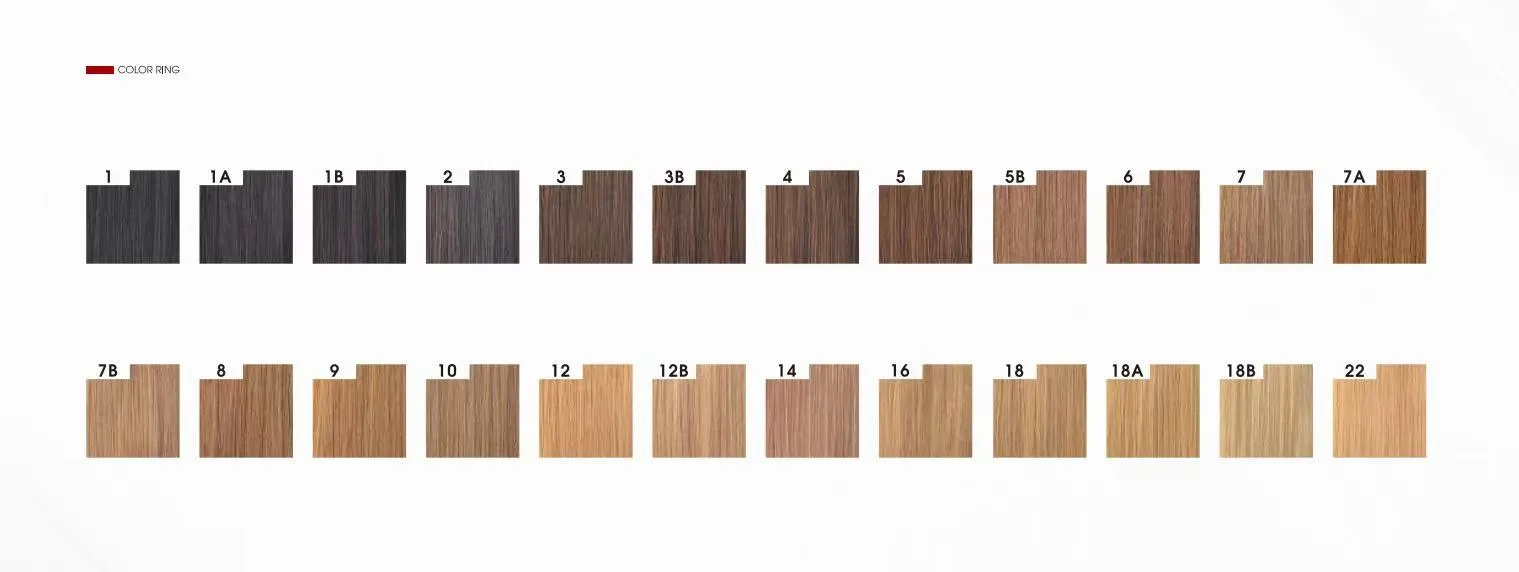
Physical hair colour reference used to plan separate shade batches

QUICK ANSWER

The short answer

First identify the product’s unit, then separate the order by construction and colour plan. For applicable Prime gram-based orders, discuss 100g per solid colour or 200g per T/Mixed colour; confirm product and batch conditions. Wigs, toppers, closures and frontals need a finished-piece minimum instead. Samples and trials are agreed separately.

On this page

KEY FACTS

What buyers should establish first.

  • For gram-based extensions and bulk hair, standard starting quantities are 100g per solid colour and 200g per T-Color or mixed colour. The final minimum depends on construction, colouring and order size; sample and trial quantities are quoted separately.
  • A colour minimum is not a per-piece weight.
  • Different constructions or colour recipes may require separate minimums.
  • A sample order is not automatically the same minimum or timing as production.

Separate the order minimum from the product configuration

An MOQ sets the smallest order the supplier agrees to make or supply under defined conditions. A configuration describes what each strand, tape piece, weft, bundle or set contains. These are different fields. A 100g order can contain many strands or tape pieces, but the count cannot be established until the per-piece weight and inclusion of attachments are agreed.

For a weft, also define whether the stated grams refer to one piece or a pack containing several pieces. For a removable set, define the complete layout. Never divide an order-weight minimum by a catalogue number unless both figures use the same net-hair or finished-product basis. Otherwise the calculated count can be misleading.

How solid, rooted and mixed colours change the discussion

A solid-colour batch follows one agreed shade target. A rooted or T-Color product adds root shade, placement and transition requirements. Mixed or piano colours add the component shades and their distribution. The 200g reference applies to the relevant colour plan, not to every shade word appearing in a marketing description.

Ask the supplier how it groups your proposed recipe. Two items with the same end colour can still have different roots or blending instructions. Conversely, do not invent separate minimums without asking whether a coordinated production plan is possible. Confirm what can be combined in writing rather than assuming that all colours in one parcel share one batch.

A provisional minimum-order worksheet

The following is an enquiry-planning example, not an accepted order or an offer. It shows how to label the questions before a supplier confirms the actual minimum.

Example order lines: reference minimum versus final confirmation
Proposed lineReference to discussDo not assume
Solid-colour Genius Weft100g per colour for an applicable gram-based orderThat every width or length is covered by one minimum
Rooted / T-Color Weft200g per agreed colour planThat root length and transition can change within one approved SKU
Piano / mixed Tape-In200g per mixed-colour plan where applicableThat 200g means a fixed tape-piece count
Solid Bulk Hair100g per colour referenceThat multiple hair-quality grades can be merged without confirmation
Complete human-hair wigFinished-piece quantity by cap and customizationThat a 100g extension minimum applies
Development sampleSeparate sample scope and quantityThat the sample establishes a universal production minimum

What happens when lengths or grades are split

Suppose a buyer wants the same shade in two lengths and two material grades. There are four potential product lines before construction is considered. Ask whether the minimum applies to each combination or whether any shared processing is feasible. Do not describe the aggregate grams as sufficient until the supplier has accepted that allocation.

This is where a concise order matrix saves time. Put construction, length, colour structure, grade, weight basis and proposed quantity in separate columns. The supplier can then mark which lines are feasible, which need more quantity and which need a sample. A single request for “mixed 100g” leaves too much unresolved to become a production instruction.

Samples, trials and production are different stages

A development sample exists to answer a defined question: construction, shade match, texture or another technical requirement. Its quantity and work content may differ from normal production. A trial order tests a limited, already defined programme. Neither automatically sets the minimum for a future order with more colours or different specifications.

Keep timing separate as well. Previous sample projects took about 20 days, with international transport taking about 10–15 days. These are planning examples: your schedule depends on materials, colour development, sample revisions and shipping route. Sampling, production and transport are quoted separately. A buyer approval delay is not factory production time, and a transport estimate is not a sample-completion date. Confirm the schedule after the product and colour plan are sufficiently clear.

Reduce complexity without losing the purpose of the collection

If the provisional minimum is too large, simplify a decision variable rather than silently changing the product. A first collection might use fewer constructions, fewer custom shades or one representative length while retaining the feature you need to evaluate. Ask which reduction actually helps the manufacturing plan; removing one marketing label may not remove the underlying colour work.

Do not order an unsuitable configuration solely because it meets a lower minimum. A product that cannot support your intended application creates a different problem later. The useful outcome is a manageable sample or trial plan with known units and confirmed allocation, not the smallest number quoted in isolation.

Show the colour allocation before adding the totals

For enquiry arithmetic only, two applicable solid-colour lines at the 100g reference plus one T-Color line at the 200g reference would total 400g. This is not an accepted minimum order: the construction, lengths, material grades, colour recipe and allocation still require confirmation.

If each colour is split between different lengths or constructions, ask whether each combination needs its own minimum. Do not use the 400g aggregate to claim that every line is eligible. A wig or topper added to that enquiry remains a separate finished-piece order.

Illustrative MOQ allocation, not a manufacturing offer
Proposed colour lineReference quantityBefore acceptance
Solid shade A100gConfirm the exact construction, length and grade
Solid shade B100gConfirm whether its processing and specification are separately acceptable
T-Color shade C200gApprove root shade, transition and colour plan
Illustrative total400gConfirm allocation; total grams alone do not approve the order

Further Reading

Explore our product specifications and linked construction references when preparing your sample request.

Separate quantity eligibility from quotation completeness

Compare minimum quantities alongside the product being quoted: construction, shade, hair quality, pack contents and included services. The wholesale guide and quotation checklist help put each supplier response on the same basis.

BUYER CHECKLIST

Use this before approving a sample or specification.

  1. Separate minimum order, piece weight and pack total.
  2. List each construction, length, grade and colour plan.
  3. Ask explicitly which combinations can share a production batch.
  4. Confirm sample terms separately from the production minimum.

FAQ

Practical questions from B2B buyers.

Does 100g per colour mean 100g per tape piece?

No. It is an order-weight reference for applicable products. Tape-piece weights are specified separately, and the number of pieces depends on the approved configuration and weight basis.

Can I use the extension MOQ for a wig or topper?

No. Finished wigs and toppers require a piece-based quantity discussion that considers their cap or base construction and customization. Loose-hair grams do not define the manufacturing work for a finished piece.

YOUR NEXT STEP

Turn Your Specifications into a Sample

Send your selected product, length, weight, colour and quantity. We can help complete the requirements for a sample or wholesale quotation.

Request a sampleWhatsApp →Email →