
Buyer Guides

Hair Extension Lengths for Wholesale Buyers: 14–30 Inches and Custom Options

For wholesale hair extensions, length means both a number and a measurement method. Our common starting lengths run from 14 to 30 inches, with custom development available for the selected product. Agree where measurement begins, how waves or curls are handled and what end fullness you need alongside the length.

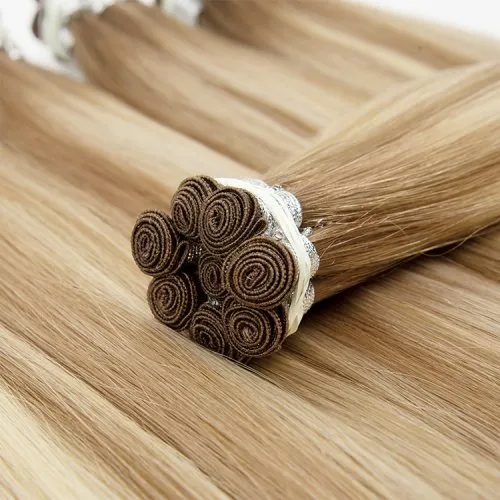
Hand-Tied Weft reference illustrating the need to define finished hair length

QUICK ANSWER

The short answer

Write the governing unit, attachment starting point, hair condition and measuring method into the specification. For wavy or curly hair, distinguish the agreed stretched measurement from relaxed visual length. Evaluate usable length and end fullness separately. Use exact unit conversion for calculations, while preserving approximate inch/centimetre references as such in historical order records.

On this page

KEY FACTS

What buyers should establish first.

  • Common references: 14, 16, 18, 20, 22, 24, 26, 28 and 30 inches.
  • One inch equals exactly 2.54 centimetres.
  • Custom length feasibility depends on the selected product and material.
  • Longest fibres, usable length and relaxed curly appearance answer different questions.

Use one governing unit and a clear conversion table

The international inch is exactly 2.54 centimetres. The table converts the common reference lengths using that factor; it is not a measurement report for a pictured product. Choose either inches or centimetres as the governing order unit, and identify any rounded display value so two teams do not apply different acceptance criteria.

A historical line written as 24in / 60cm uses approximate paired references. The exact conversion of 24 inches is 60.96cm. Similarly, 22 inches converts to 55.88cm, not exactly 55cm. Preserve the source wording when describing an old order, but resolve the governing length before placing a new one.

Exact conversions for common reference lengths
Reference inchesExact centimetresPurchasing status
14 inches35.56 cmReference option; confirm feasibility and sample
16 inches40.64 cmReference option; confirm feasibility and sample
18 inches45.72 cmReference option; confirm feasibility and sample
20 inches50.80 cmReference option; confirm feasibility and sample
22 inches55.88 cmReference option; confirm feasibility and sample
24 inches60.96 cmReference option; confirm feasibility and sample
26 inches66.04 cmReference option; confirm feasibility and sample
28 inches71.12 cmReference option; confirm feasibility and sample
30 inches76.20 cmReference option; confirm feasibility and sample

Define where the measurement starts

For a weft, agree the relevant starting point at the track and how the hair is laid out. For a tape or bonded strand, state whether the attachment is excluded from the hair-length measurement and identify the landmark used. A complete wig or topper can have different lengths in different zones, so a single extension-style measurement may not describe its intended shape.

Record the method with a simple diagram or a photograph of your own approved sample. The diagram should clarify the start and end points rather than act as a substitute for the physical sample. If the product is trimmed or layered after construction, identify whether the quoted value refers to the material before finishing or the usable finished product.

Separate stretched curly length from relaxed appearance

A curl or wave changes how long hair appears when relaxed. Before comparing two suppliers, agree how the pattern will be handled for the length measurement and whether the relaxed visual fall is also being reviewed. Use consistent preparation and avoid introducing an unagreed amount of tension simply to obtain the desired number.

The texture sample remains important even if the measured length agrees. Two patterns can reach the same measured length while falling differently in the intended product. Record the actual pattern, the condition under which it is assessed and any agreed washing or handling procedure. Do not treat “curly” as a standardized geometric description shared by all suppliers.

Length fields that should not be substituted for each other
FieldQuestion it answersRecord alongside it
Governing measured lengthHow long is the hair under the agreed method?Unit, start point and condition
Relaxed visual fallHow does the texture present without stretching?Pattern reference and viewing method
Usable finished lengthWhat length is available for the intended product?Finishing or trimming definition
End fullnessHow much hair continues towards the ends?Agreed evaluation method and sample reference

Do not use the longest fibres as the whole quality definition

A small number of long fibres can establish a maximum observed reach without establishing full-looking ends. Buyers should therefore discuss usable length and end fullness independently. Agree how the sample will be assessed and where comparisons are made. A Double Drawn label alone does not supply that method.

This matters when comparing longer versions of an existing product. Keeping the same total weight does not automatically preserve the same distribution through the ends. If your collection extends an approved shorter item to a longer reference, review the finished sample instead of assuming that the original approval transfers unchanged.

Write a length acceptance line that another person can use

A useful acceptance line names the product, reference length, unit, measurement landmark, preparation condition and agreed tolerance. Leave the tolerance open for confirmation if it has not been agreed; do not invent a percentage or borrow one from another supplier’s catalogue. The record should allow a different inspector to repeat the same check.

Include photographs of the method where helpful, but avoid relying on a perspective-distorted picture of a ruler as the only evidence. Retain actual readings with the sample identifier. If a result differs, first compare the methods and starting points before concluding that the product itself is different.

When custom length is worth developing

Custom length can be appropriate when an established reference does not meet a specific collection or construction need. Ask about the selected material, colour-processing route, texture and finished-product feasibility together. Assess the requested length alongside the selected material, shade and construction before developing a sample.

It may be unnecessary when the buyer has not yet decided the application or intended finished appearance. In that situation, a reference sample can answer the practical question with less development ambiguity. Decide what the custom length must accomplish, then ask the manufacturer to review that requirement rather than simply request the longest number.

Further Reading

Explore our product specifications and linked construction references when preparing your sample request.

Keep length approval connected to the sample’s usable ends

The end-fullness guide explains why a length label cannot describe the entire distribution of hair. The sample-evaluation checklist provides a place to record that distribution alongside the measured length. Retain both observations when approving a longer version of a previously accepted product.

BUYER CHECKLIST

Use this before approving a sample or specification.

  1. Select one governing unit and label rounded conversions.
  2. Record the starting point and hair condition.
  3. Review relaxed texture appearance separately from measured length.
  4. Approve end fullness and length as distinct fields.

FAQ

Practical questions from B2B buyers.

Does 24 inches equal exactly 60cm?

No. Using 2.54cm per inch, 24 inches is 60.96cm. A historical order may use 24in / 60cm as paired commercial references; a new specification should identify one governing measurement.

Are 14–30 inches the only lengths available?

Custom lengths can also be developed. Share the intended product, hair quality, colour and finished-length requirement so we can review the sample specification.

YOUR NEXT STEP

Turn Your Specifications into a Sample

Send your selected product, length, weight, colour and quantity. We can help complete the requirements for a sample or wholesale quotation.

Request a sampleWhatsApp →Email →